


When you spend time around children, you quickly learn that incidents rarely announce themselves in advance. A quiet lunchtime can shift to a choking emergency in seconds, and a routine play session can end with a head injury before anyone has time to react.
The difference between feeling helpless in those moments and feeling prepared often comes down to whether you have had the chance to practise the key skills before you need them. Paediatric first aid training gives you that opportunity, so the first time you manage an airway or respond to an allergic reaction is not during a real emergency with a real child in front of you.
At TL Training, we deliver paediatric first aid courses at our Ellesmere Port training centre, with on-site delivery also available for organisations across the UK. This guide looks at how training helps you build genuine confidence, and why that confidence matters when a child needs your help.
How Paediatric First Aid Training Prepares You for Real Incidents
Reading about first aid is not the same as doing it, and most people who have been through an emergency will tell you that the gap between theory and practice feels much wider when you are under pressure.
A well-structured paediatric first aid course closes that gap by giving you time to practise skills in a calm environment, with feedback from an experienced instructor. You learn how the techniques feel, where to position your hands, how much force to use, and what to do if your first approach does not work.
Practising Skills Before You Need Them
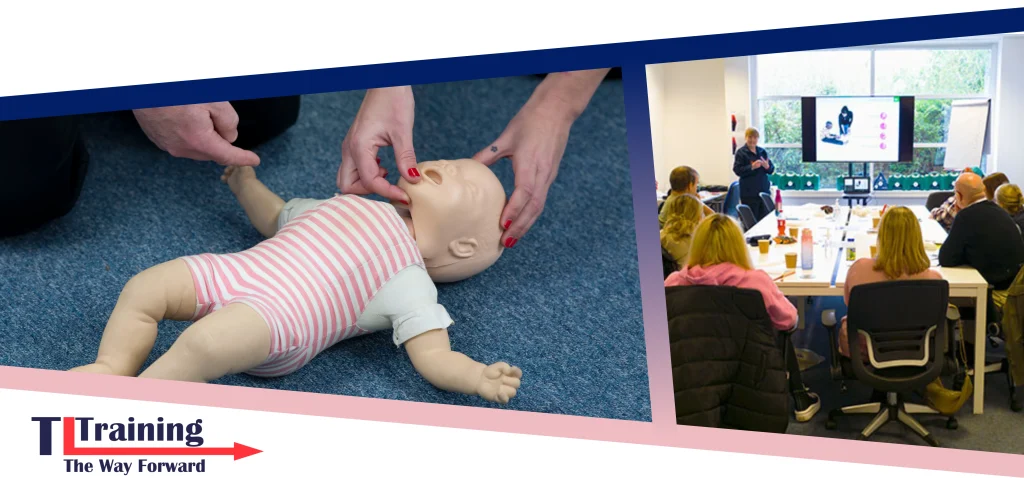
When you attend a course, you work through scenarios using manikins designed to represent infants and children, so the movements become familiar before you face a real situation. This repetition helps you respond more calmly and more quickly, because you are not trying to remember instructions from a book while a child is struggling to breathe.
Learning to Adapt to Different Ages and Sizes
Children are not simply small adults, and the techniques you use for a newborn are different from those you use for a seven-year-old. Paediatric first aid training covers the full age range, so you understand how to adjust your approach depending on the size and development stage of the child in front of you.
Understanding When to Escalate and How to Hand Over
Part of confident first aid is knowing when a situation needs more help than you can provide. Training helps you recognise warning signs, make clear decisions about when to call for emergency services, and communicate effectively when you hand over to paramedics or other professionals.
What Paediatric First Aid Courses Typically Cover
If you are considering training, it helps to know what you can expect from the course content. While specific syllabuses vary between awarding bodies, most paediatric first aid qualifications cover a core set of topics designed to prepare you for the incidents you are most likely to encounter.
The areas typically included are:
- Paediatric CPR for infants and children, including airway management and recovery positioning
- Managing choking, with techniques adapted for different age groups
- Recognising and responding to medical emergencies such as seizures, asthma attacks, and allergic reactions
- Treating injuries including burns, bleeding, fractures, and head injuries
- Safeguarding considerations and appropriate communication with children and parents
- Recording incidents and providing clear handovers
Our Level 3 Award in Paediatric First Aid is delivered over two days and includes both theory and practical assessment, so you leave with a recognised qualification and the skills to back it up.
Why Confidence Matters as Much as Knowledge in First Aid
You might already know what you are supposed to do in an emergency, but knowing and doing are different things when a child is in distress and other adults are looking to you for direction.
Confidence comes from practice, and it also comes from understanding why each step matters.
When you know why you are tilting a child’s head to a certain angle, or why you are checking for a response in a particular way, you can adapt if something unexpected happens rather than freezing because the situation does not match the textbook exactly.
Parents and carers often report that the biggest benefit of paediatric first aid training is not the certificate itself, but the sense of readiness that stays with them long after the course ends. That readiness can make a real difference to outcomes, because hesitation in the first few minutes of an incident can cost time that a child cannot afford to lose.
Paediatric First Aid Training at TL Training
If you want to build the skills and confidence to respond effectively when a child needs help, our Qualsafe Level 3 Award in Paediatric First Aid gives you a nationally recognised qualification delivered by experienced instructors in a practical, supportive environment.
Courses run at our training centre at The Technology Centre in Ellesmere Port, with free parking and step-free access. If you would prefer to train your team together at your own site, we also offer on-site delivery across the UK.
To book a place on an upcoming course, view the course page and available dates here. If you would like to discuss on-site training for your organisation, call us on 0151 343 0588 or email [email protected] for a quote.