


The majority of people who take a First Response Emergency Care qualification have some direct connection to emergency or pre-hospital care already – whether they work alongside paramedic crews as an Emergency Care Assistant, hold a defined casualty care responsibility within fire, police or military service, or are building actively toward a clinical career.
That is not coincidental. First Response Emergency Care training is a pre-hospital care pathway, built around clinical reasoning, systematic patient assessment and managing emergencies in the gap before advanced help arrives. Those are exactly the competencies the ambulance sector and emergency services run on.
The reason FREC qualifications increasingly appear on training plans beyond those sectors is that the same framework, and the same clinical depth, translates directly into any setting where your staff might face a serious medical or trauma incident without immediate access to advanced care.
That’s why, understanding who the qualification is designed for at each level, and where the operational value is strongest, puts you in a better position to judge whether it is the right step for your own team or organisation.
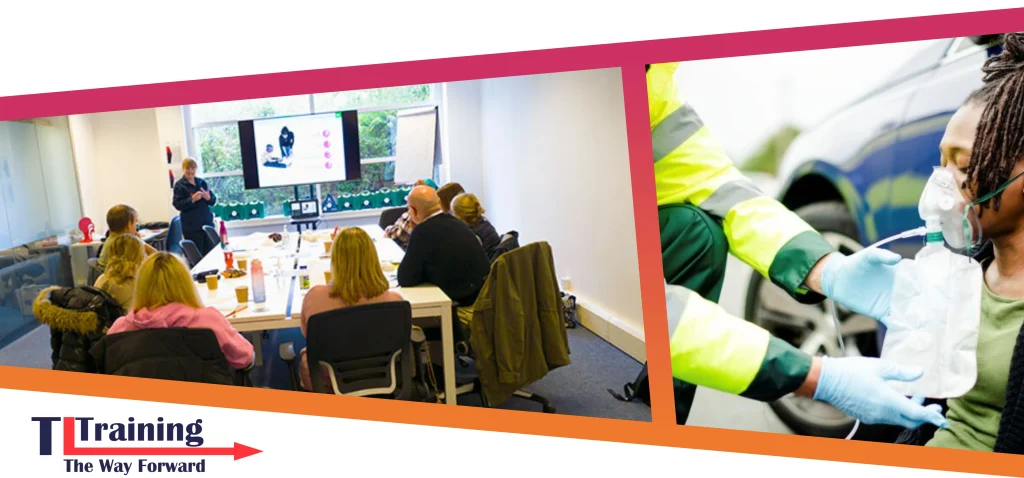
The Roles and Sectors That Drive the Strongest Demand for FREC Qualifications
Emergency Care Assistants form a significant part of the FREC 3 learner base, both in NHS services and in the private ambulance sector. ECAs work below the level of a qualified paramedic, but the role demands a solid and structured first response foundation, and FREC 3 maps directly to that. For individuals working within or toward that space, the qualification carries genuine vocational weight.
FREC 4 draws even more heavily from people already embedded in pre-hospital care, with most learners coming from roles where they are managing complex incidents regularly and need deeper clinical reasoning to match.
Beyond the core ambulance and emergency services market, demand comes from organisations whose staff face serious incident risk as a function of where and how they work – not because emergency response is their primary role. The common thread is a gap between when something serious happens and when advanced clinical support arrives, and whether the people already present have the training to manage that gap safely and effectively.
Sectors and roles where that case is strongest include:
- Emergency Care Assistants and ambulance support staff in NHS and private services
- Event medical personnel covering festivals, sporting events and large public gatherings
- Close protection officers, door supervisors and crowd safety staff
- Adult social care and high-dependency community care providers
- Workers in remote or high-hazard environments: offshore, forestry, construction and utilities
- Fire, police and military personnel with defined casualty care responsibilities
Choosing Between FREC 3 and FREC 4: What Each Level Is Actually Designed to Achieve
Both FREC levels sit on the Regulated Qualifications Framework, both require full attendance across a five-day programme, and both lead to a nationally recognised Qualsafe certification with formally assessed outcomes. The distinction lies in clinical depth and the experience baseline each one demands.
Getting the level right matters, because FREC 4 is not a bolt-on extension of FREC 3 but a genuinely different clinical undertaking that requires both the prior qualification and substantial contextual practice to benefit from.
FREC 3 and the RPL Route: Building or Formalising the Clinical First Response Foundation
The FREC 3 qualification covers systematic patient assessment, trauma and medical emergency management, emergency oxygen administration and structured casualty handover across five days. It meets HSE requirements for First Aid at Work and maps to Level D of the Faculty of Pre-Hospital Care PHEM Skills Framework, satisfying both regulatory and operational demands in a single programme.
For delegates who already hold a recognised first responder qualification – FPOS, First Responder or an equivalent pre-hospital care credential – the two-day RPL route converts that existing knowledge into the full Qualsafe Level 3 Award through guided revision, scenario work and formal assessment. If you need to bring a mixed-experience team to a consistent qualification standard, this pathway avoids putting your more experienced staff through content they already know well while still arriving at the same certified outcome.
FREC 4: Advancing Clinical Reasoning and Technical Range in Pre-Hospital Settings
The FREC 4 training programme is built for delegates who already hold a valid FREC 3 and are ready to operate with greater clinical independence. The course introduces ECG interpretation, advanced airway management including supraglottic devices, medical gas administration, major trauma, and paediatric and obstetric emergencies. Entry also requires approximately 118 hours of contextual emergency care practice, which reflects how clinically demanding the programme genuinely is.
Most FREC 4 learners come from roles where they are already managing complex pre-hospital incidents, such as event medical leads, ambulance support staff and personnel with advanced casualty care responsibilities. The course draws directly on that experience, helping your responders sharpen judgement and deepen technical range rather than covering foundational ground. For employers considering FREC 4 for a wider team, the realistic starting point is identifying who is already operating at FREC 3 level and routinely managing complex incidents as a defined part of their role.
What FREC Certification Means for Your Compliance and Documentation Position
Both qualification levels sit within the Qualsafe regulated framework – Ofqual regulated, nationally recognised, and assessed against a defined syllabus. That matters when you need to evidence your training provision to clients, insurers or sector regulators, because a regulated qualification carries documented standards rather than simply recording attendance.
There is also a practical duty of care dimension worth considering. Regulated pre-hospital care training creates a verifiable record that your organisation has matched first response capability to the actual risks your staff face. In sectors where incident risk is elevated (events, close protection, offshore work, high-dependency care, etc.), that documentation is increasingly expected rather than simply good practice.
Taking the Right FREC Training for Your Team
If the working environments your staff operate in have made First Response Emergency Care training a genuine consideration, the right next step is usually a focused conversation about which level fits your team’s current position and where you need them to get to.
Whether you’re looking at open FREC course dates or on-site delivery shaped around your own shift patterns and operational calendar, the programme structure at both levels can work around the realities of how your organisation runs.
To talk in more detail about which level suits your team or to check upcoming availability, call TL Training on 0151 343 0588 or email our team at [email protected].